
“Someone had said that when computers really learned to play chess and played against one another, White would always win because of the first move. Like tick-tack-toe.”
— Walter Tevis, author of The Queen’s Gambit
The medieval game of chess evolved and survives in modern times, which emphasizes the pervading influence of the Middle Ages on the present. The medieval period’s impact on today is evident through something as simple as the game pieces’ enduring symbolism of feudal society but is also visible through popular culture and scholarly discussion that echoes the medieval thought that chess carries intellectual value.
Fernand Gobet, a chess International Master and professor of psychology, states in his book, Psychology of Chess (2018), regarding chess’ academic value:
“Chess has been a topic of much scientific research. It has been investigated by a number of academic disciplines, including sociology, ethnology, philosophy, mathematics, and neuroscience. By far, it is in computer science (including artificial intelligence) and psychology that chess has been studied to the greatest effect. In artificial intelligence, chess has been a standard task for the development of machine learning and search algorithms. In psychology, it has been the topic of seminal research into perception, memory, learning, thinking and decision-making. It has sometimes been called the drosophila of cognitive psychology, by analogy to the role of the fruit fly in genetics.”
Chess is explored in scientific and mathematical fields but also holds significance in art and the humanities. Gobet furthers these thoughts about chess’ significance when discussing more specifically his own academic field of psychology and expertise research:
“Nowadays, chess psychology is an active domain of research and is arguably still the main domain in expertise research. Many different aspects of chess are studied, from cognition to personality to intelligence. Several reasons explain this popularity, including: chess has its own rating system, the Elo rating, which offers a precise and up-to-date measure of skill; it has an ideal balance between simplicity and complexity; it allows many experimental manipulations, and it has strong external validity. In fact, the key discoveries made in these psychology generalise to most domains of expertise, and indeed to psychology in general…Thus, researchers often study chess not for its own sake, but for understanding expertise in general.”
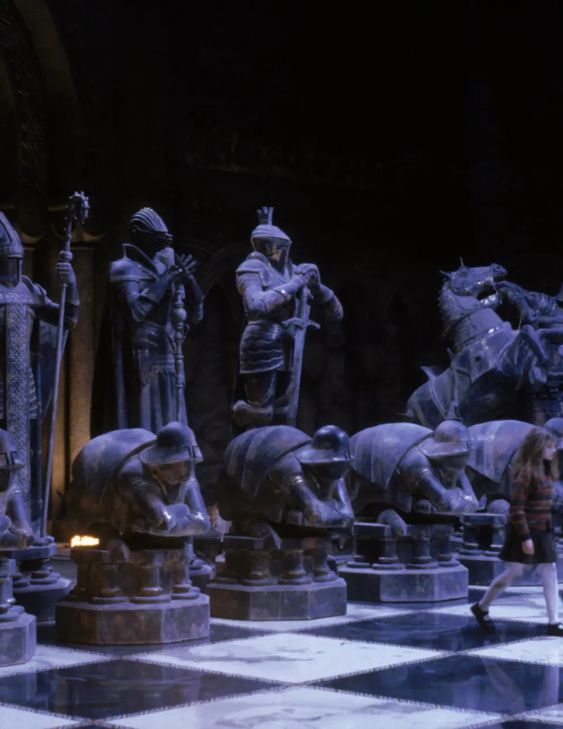
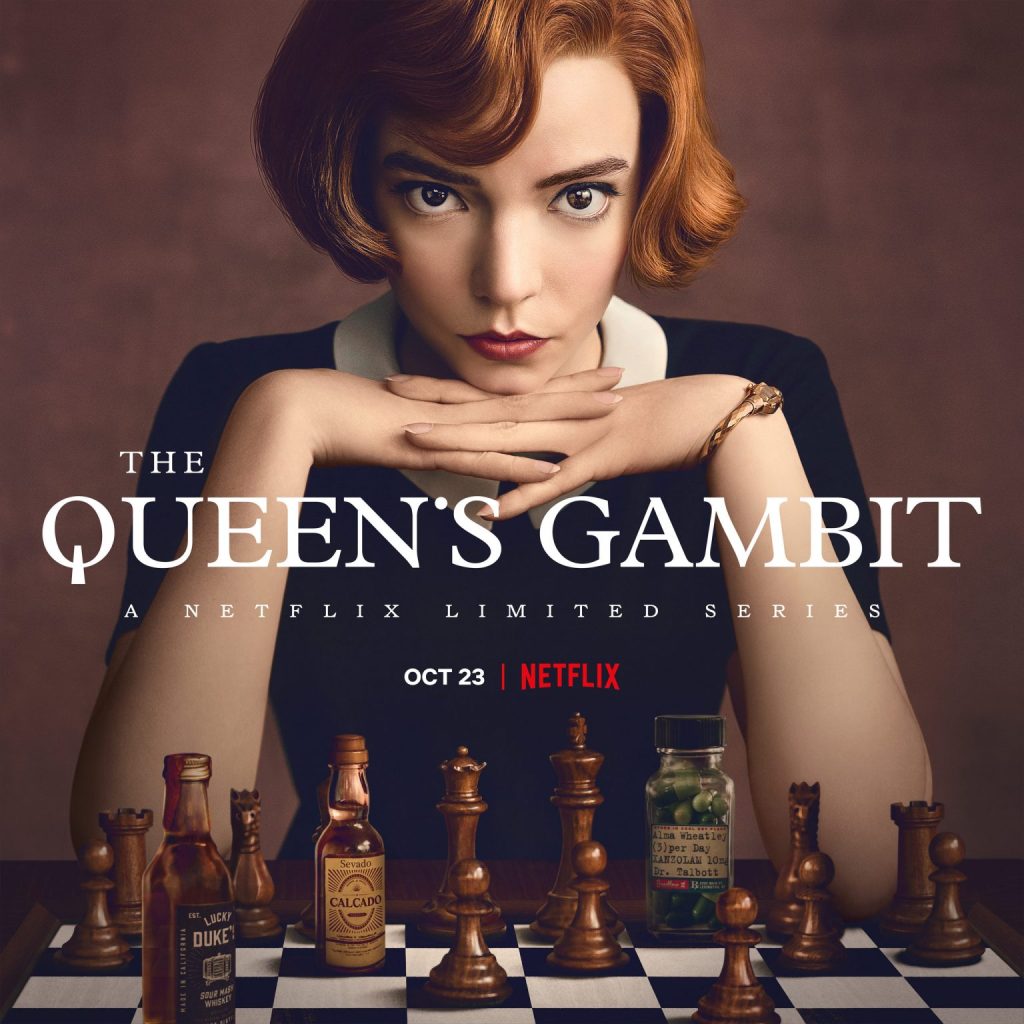
For fields such as history, chess has been studied for what its pieces might reflect about medieval society and power dynamics. For example, chess allowed courtly women to socialize with young men and was used as a metaphor for the etiquette of lovers. Merilyn Yalom’s Birth of the Chess Queen explores how relating chess to religion and political and social power can reveal the position of medieval women in these areas. Because men today disproportionately play chess more than women and tend to outperform women in chess, chess continues to be an area that is studied to help scholars better understand contemporary gender differences. In art and the entertainment industry, chess has made multiple appearances, such as in The Queen’s Gambit, Harry Potter, Star Trek, and Alice’s Adventures in Wonderland: Through the Looking Glass.
Chess today can also be played online. Some considerations of these incarnations are that online chess typically only visually shows the top portions of pieces (like a crown or the head of a bishop) unless the piece is a pawn or a rook. Online chess also often highlights the spots where someone can make a move when he or she clicks on a piece. In addition, some versions, such as on lichess.org, gives the king a red aura when he is in check. These tools, in some ways, arguably make playing chess easier on the player since it gives less opportunity for a player to make a mistake in the event he or she accidentally fails to consider a strategical move. Although online chess provides a different kind of experience than when using a physical board and pieces, it progresses chess from being a game played by the aristocratic elite, as seen in the Middle Ages, to one that is more accessible and entertaining for anyone who wishes to play.
More on chess today…

Persian Chess
On the Eastern Origins of Chess Though the exact origin of chess has for some time been contested, many have convincingly argued that based on archaeological and etymological evidence, chess originated in India as a war game called chaturanga around the 6th century CE. Called caturaṅga in Sanskrit, the word derives from catuh, meaning “four”…

 Medieval Dayraven